


Ergonomics and Human Factors

Human-IA interactions

Artificial Intelligence (AI):
Towards what new challenges?

Artificial intelligence (AI) is profoundly transforming products, services and working environments. From predictive interfaces to conversational agents and process automation, it is opening up major opportunities in terms of performance and efficiency.

Yet its integration raises critical challenges:

  • Complex interactions between humans and automated systems
  • Increased cognitive load for users
  • Acceptability and adoption of new solutions
  • Managing the risks associated with autonomy and algorithmic decisions

Experience proves it: to ensure a successful transition and maximise the added value of artificial intelligence (AI), it is essential to adopt an approach that puts people at the heart of the design process.

Ergonomics and human factors, strategic levers for integrating Artificial Intelligence (AI) into complex systems.

The integration of artificial intelligence is not limited to its technical development. It's about building systems that are intuitive, reliable and adapted to the real needs of users.

Ergonomics and human factors engineering (HFE) provide a concrete response to :

  • Objectivising the added value of AI: Rather than adding functionalities without considering their impact, we assess the real benefit of AI for users and the organisation.
  • Optimising cognitive load: Far from being a simple assistant, AI can sometimes complicate the use of a system. We analyse human-machine interactions to avoid cognitive overload and improve the user experience.
  • Improving decision-making: By structuring information flows and adapting interfaces, we enable operators to interact with AI more fluidly and efficiently.
  • Facilitating adoption and appropriation: Poorly integrated AI can be perceived as a constraint or generate rejection. Our co-design methods involve users from the outset to ensure greater acceptability.
  • Reduce risks and hidden costs A poor integration of artificial intelligence can lead to errors, inefficiencies and significant additional costs. Our approaches enable us to anticipate these impacts and correct them before deployment.
AI and cockpit

Decision-making in critical situations

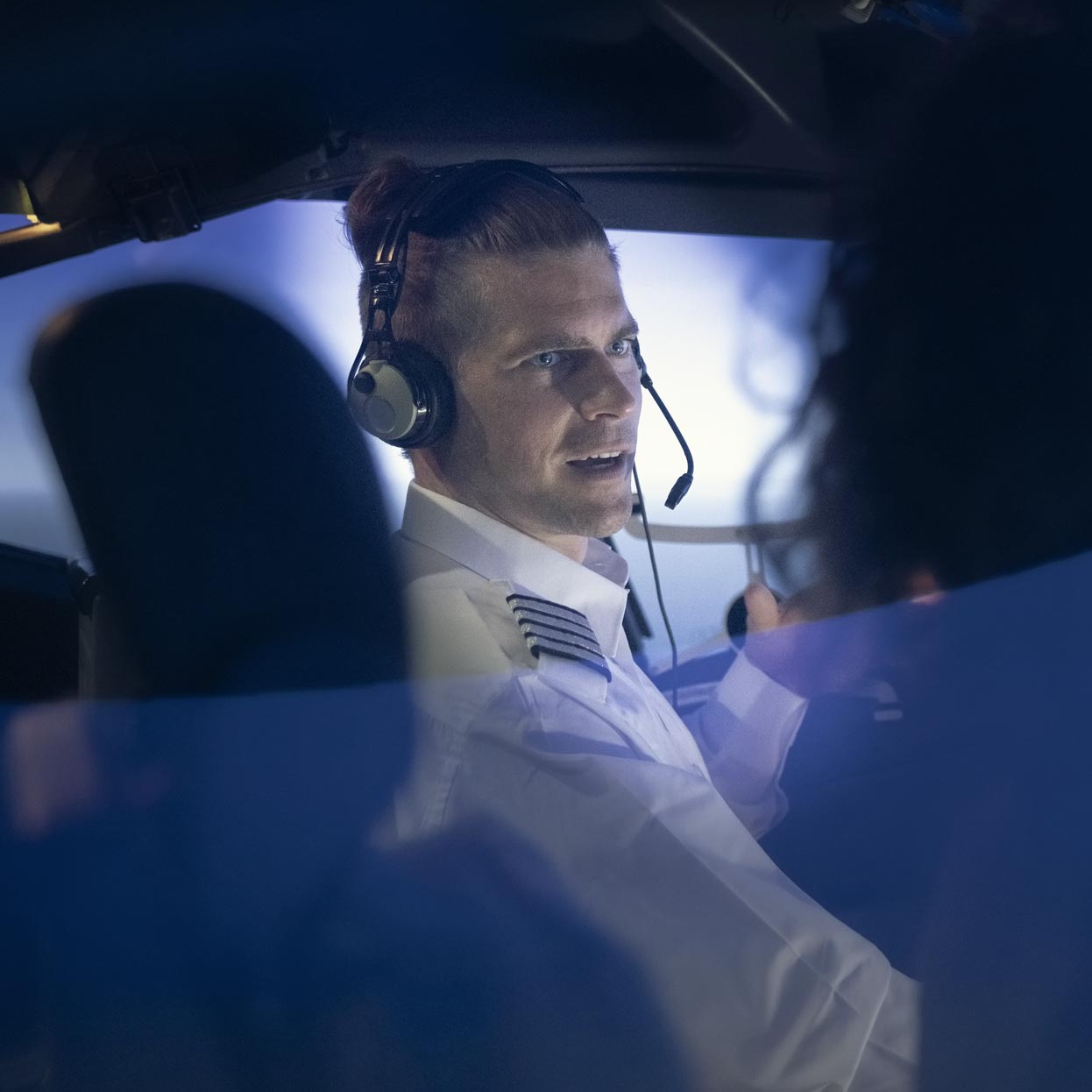
Integrating artificial intelligence (AI) into a cockpit should not increase the cognitive load on pilots, but on the contrary facilitate their decision-making in extreme conditions. Using an ergonomic and immersive virtual reality approach, we have identified the most effective interactions, enabling pilots to anticipate key information more quickly and make full use of the capabilities of artificial intelligence, without overloading their attention.

AI and control room

Increasing operational efficiency

In an environment where every second counts, the integration of artificial intelligence (AI) has made it possible to optimise information flows and restructure decision-making processes. By facilitating the prioritisation and transmission of critical data, we have reduced the cognitive load on operators and improved their ability to manage massive volumes of information, thereby increasing the responsiveness and reliability of decisions.
AI and defence systems

Evaluation of Human-System collaboration

In a context where precision and speed of execution are essential, we have developed a unique protocol for evaluating human-IA collaboration. This approach has enabled us to identify the technological configurations best suited to the real needs of operators, guaranteeing a better division of tasks between artificial intelligence (AI) and humans, while ensuring an optimum level of performance and smooth adoption of new technologies.
AI Action Summit 2025

"Explore Human-AI Interactions"

Human design Group contributed its expertise to the White Paper «Explore Human-AI Interactions», coordinated by Bunka.ai, presented at the AI Action Summit 2025.
Our contribution? Three case studies from the aeronautics, space and defence sectors, illustrating how well-integrated AI can optimise human-system interactions, while taking account of organisational, operational and cognitive constraints.

Artificial intelligence and operational efficiency

Effective AI is well-integrated AI

While the rise of artificial intelligence raises new challenges, the fundamental issues remain unchanged: guaranteeing the effectiveness, reliability and adoption of technologies by users. For over 40 years, our disciplines - ergonomics and human factors engineering - have relied on proven scientific methodologies to structure the integration of technological innovations.

Our Human-System Research & Innovation Centre has already enabled us to design evaluation and design tools that are unique on the market, capable of objectifying the performance of human-IA interactions and maximising their operational value.

The emergence of generative AI represents a potential upheaval in business transformation. However, IFH's expertise, methodologies and tools have all the concepts needed to support these organisational and operational transformations.

Arnaud Merle
Anticipate

AI is transforming your business,
we secure its integration.

We offer you a rigorous and measurable approach,
making every AI implementation a genuine performance driver.

References

Immersive design

Man-IA organisation

Human-Robot collaboration

Sectors

Industry

Aerospace

Defence & Security

How does human-centred design facilitate the design of advanced interactions?

Human factors and organisational design