


Our experience has been acquired both at the level of system design, by integrating into engineering the requirements necessary to take account of human and organisational factors, and at the level of feedback from existing systems to identify ways of improving their level of safety by better adapting systems to human and organisational factors.
In this field, we carry out studies and assessments of human and organisational factors, focusing on the analysis of work situations (existing or future) with a view to anticipating and understanding the risks associated with organisational and human factors for the reliability of installations. In return, our analyses enable us to put in place conditions that encourage operators and organisations to make a positive contribution to safety management.
The Human design Group's teams are involved in the following design and assessment issues centred on human and organisational factors:
The Human Design Group has over 40 years' experience in the field of human and organisational factors studies, acquired in high-risk organisations (nuclear, aeronautical, transport, industrial).
Human design Group carries out expert assessments and studies to anticipate and understand the risks associated with organisational and human factors for the reliability of facilities. Our teams are involved both in the design of facilities and in safety reviews during the operating phase of sensitive installations.
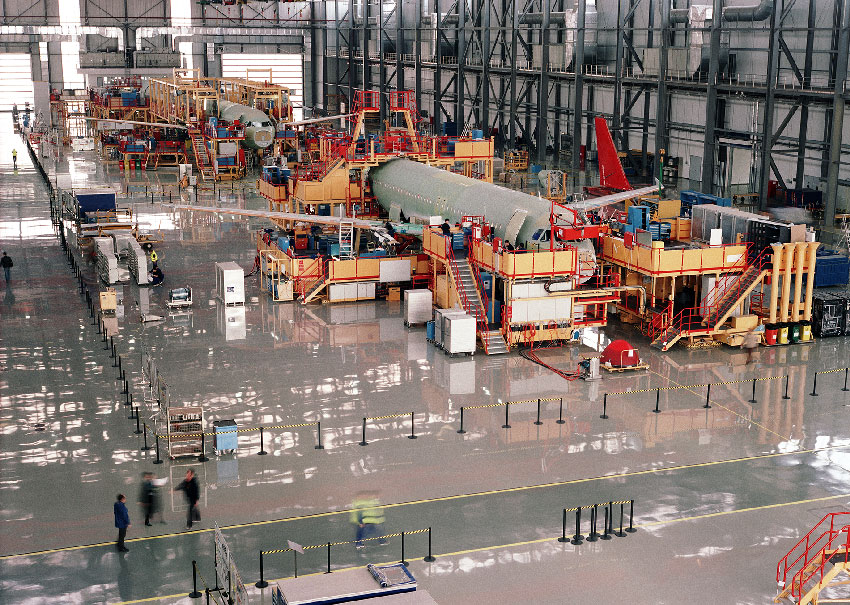
We are mainly involved in aeronautical production lines, nuclear facilities (all phases of the fuel cycle) and industries with high operational stakes.
As technological advances open up new opportunities to optimise industrial processes, it is vital to ensure a smooth transition and buy-in from operators. The challenge is to ensure that these technologies are mastered, understood and used efficiently to improve productivity and quality.
Appropriate training, transparent communication and a corporate culture that encourages innovation are key to meeting the challenges of this digital transformation. Actively involving operators in this process enables companies to capitalise on their expertise and creativity, creating an environment conducive to success.
Industry 4.0 is bringing operational efficiency to the forefront of new concerns. In this new technological environment, the ability to optimise processes and collect and analyse data in real time is becoming essential to remain competitive. The integration of technologies such as the Internet of Things (IoT), artificial intelligence (AI), advanced automation and additive manufacturing is enabling the creation of intelligent, connected factories.
However, this also involves challenges such as securing data, training employees in the use of these emerging technologies and reorganising workflows. The key issue is therefore the ability of companies to focus the adoption and use of these technologies on operators, in order to improve operational efficiency, increase agility and be able to adapt to increasingly complex demands.
While automation and robotics promise to significantly increase the efficiency, productivity and quality of industrial processes, they also raise questions about the future of work and employment. Automation may lead to job losses in some sectors, requiring a reorientation of workers' skills and accompanying measures.
In addition, the security and seamless integration of robots into what are now hybrid teams, and the management of sensitive data are all challenges that need to be overcome if these technologies are to be successfully adopted. Nevertheless, there are still huge opportunities for improving competitiveness and innovation in businesses, provided that they are approached in an ethical, responsible and sustainable manner.