Ergonomics and Human Factors

Product & Service Design

Converging approaches

Human-centred transformation goes beyond technology and creates a convergence between product and service design approaches. Indeed, as a lever for differentiation and the personalised evolution of the experience, servitisation offers competitive opportunities for precisely adapting the product experience. For its part, service design needs to reconcile the challenges associated with the industrialisation of technological products with the integration of stakeholders in the definition and implementation of an innovation strategy.

It is therefore up to both technologies and organisations to be attentive to the transformations underway in uses and activities, which have become the cornerstone of all design approaches. To achieve this, comprehensive support incorporating strategic consultancy as well as expertise in ergonomics, physiology, cognition and social organisation is the shared key to successful transformation.

For 45 years, Human design Group has been involved in the design and improvement of products and services covering a wide range of sectors such as aeronautics, defence, energy/nuclear, transport and mobility, as well as the tertiary sector and telecommunications. Our expertise is based on a complete integration of human aspects at every stage, whether to guarantee the viability, feasibility or desirability of a project. Our objective remains unchanged: to create products and services that are accessible, easy to use and perfectly adapted to needs. By improving user-perceived efficiency, overall performance and pleasure of use, we help our customers to facilitate and reinforce their strategy of innovation and transformation of their products and services.


User search

New design paradigms

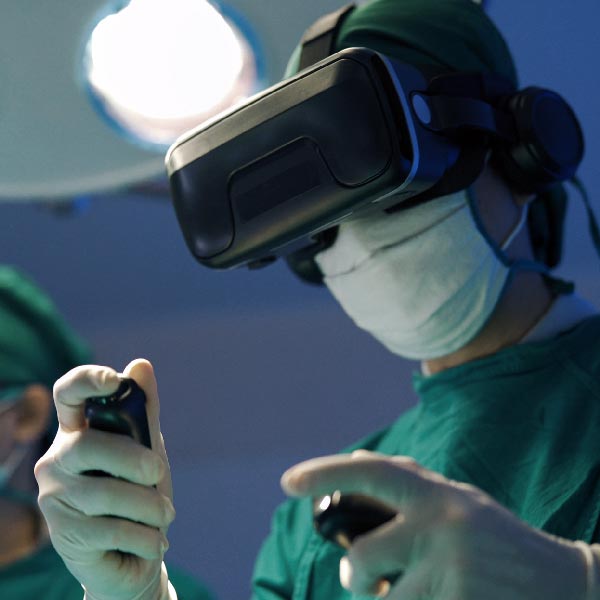
The phygital experience, the integration of artificial intelligence and robotic assistance transcend the traditional boundaries of design, opening up new perspectives.

However, the challenges are as complex as the opportunities. Cultural, ethical and social factors, as well as user expectations, combine with the integration of new normative guarantees. all the while demanding unified pathways that bring products and services together in meaningful experiences.

User experience

From functional to aspirational

While design necessarily integrates functional aspects, it often pays less attention to the sustainability of the experience, and in particular to the aspirations and emotions of users. Emotions are often summed up as incentives linked to gamification or other temporary stimuli, but along with the values conveyed by the brand, they play an essential role in the quality of the user experience.

While the theory of «flow» has highlighted this structuring issue, few players are able to apply it systematically in their design process. This is precisely what we have achieved over several years of in-house research and development. Our approach, which encompasses functional, sensory and emotional aspects, goes beyond our customers' expectations by natively integrating the pleasure of use and its natural maintenance into the very experience of the product or service.

Business tools

The source of organisational value

Human beings, who are intrinsically social, are never truly alone. They take with them a multitude of sociological, cultural and relational variables that shape their perception of the world and their personal experience of it.

It is in this organisational dimension that design acquires new capacities for tackling the complexity of design processes. The organisational component is thus brought to the fore, whether by mobilising the organisation towards a shared vision or by finding a common language to rationalise a design strategy. Supporting change through design reveals opportunities for positive transformation, not just of a product or service.

Digital transformation

Our approach

Our approaches and methodologies are systematically tailored to our customers' projects, objectives and investments. What they have in common is that they encourage collaboration between the design, development and service delivery teams to guarantee a coherent, high-quality user experience. Certain elements of phasing are commonly shared:

  1. Understanding the context
    • identify the real needs and expectations of end users and stakeholders,
    • analyse the competition and the market to identify trends and opportunities,
    • assess the technical, economic and regulatory constraints that can influence the process.
  2. Research and ideation
    • collect qualitative and quantitative data through interviews, observations, surveys, etc.
    • generate hypotheses and ideas using brainstorming and design thinking techniques,
    • Create rapid or low-definition prototypes to quickly test concepts and iterate.
  3. Design
    • develop concepts based on the results of research and ideation,
    • modelling usage scenarios to sketch out how products or services fit into reference pathways,
    • evaluate concepts in terms of their viability, feasibility and acceptability.
  4. Specifications
    • develop detailed specifications (including technical drawings, processes, information flows, interfaces and service strategies, etc.),
    • integrate the principles of physical and cognitive ergonomics, user experience design (UX) and organisational and human factors (OHF) to guarantee efficiency and usability.
  5. Prototype and tests :
    • create functional prototypes,
    • Test with users to gather feedback and identify potential problems,
    • iterate to improve the design based on feedback (RETEX).
  6. Support for implementation :
    • monitoring the manufacture of prototypes or the implementation of services in line with specifications,
    • training of service delivery teams where appropriate.
  7. Monitoring and continuous improvement :
    • collect data on the actual use of products or services,
    • analyse performance against initial objectives,
    • update and improve the design based on user feedback and market developments.
Products and services

References

Service roadmap

GRTGaz

TMM Software

Products and services

Sectors

Mobility

Health

Energy

Exploring new interactions
man-machine