



The history of the Human Design Group is directly linked to the transformations in design methodologies and, in particular, in the profession of ergonomics in France, as initiated in the 1960s under the influence of the development of computerisation and automation.
At this time, French ergonomics was itself undergoing a major paradigm shift, moving from a behaviourist to a cognitivist approach.
This development, motivated in particular by the transformation of professions whose activity is less directly observable (supervision and control tasks in the air or rail transport sectors), followed a logic of applied research in various sectors within IRIA (the future Inria). The integration of the first information systems into production processes has given it many subjects to explore (RATP, Steria, EDF, etc.). With a wealth of research work, results and publications, she quickly gained national and international recognition (3).
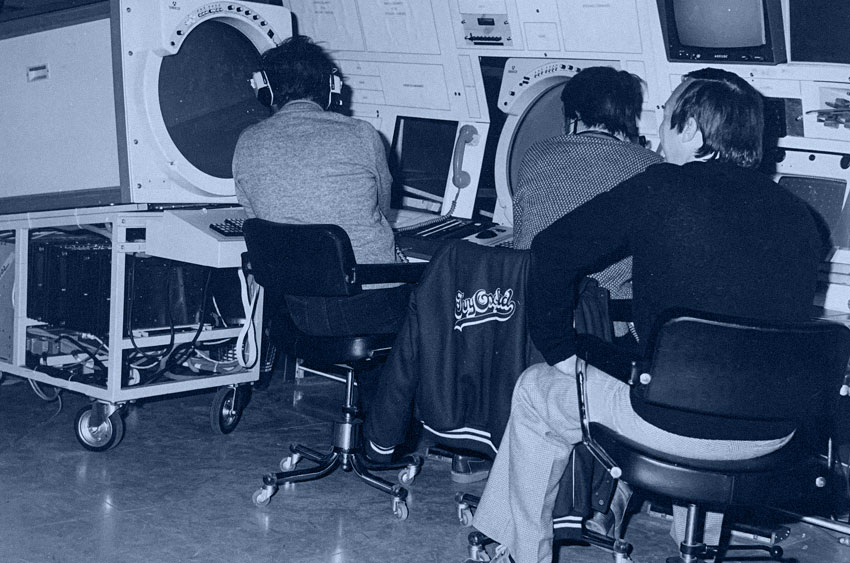
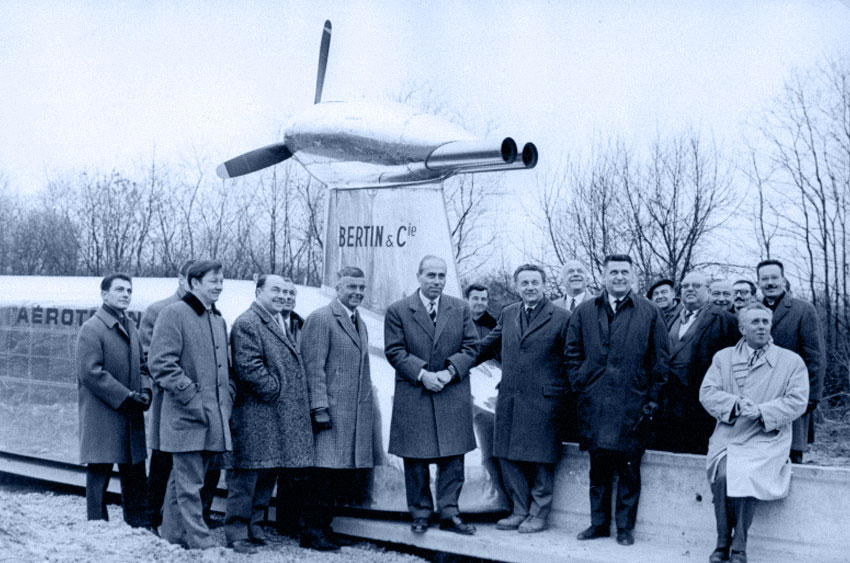
Jean Bertin, the engineer who invented the aerotrain and founded Bertin et Cie (which became Bertin Technologies in 1999), was a member of the Board of Governors of the first Maîtrise des Sciences et Techniques d'Orsay (1975). He anticipated the challenges posed by the contribution of ergonomics to the design and reliability of complex man-machine systems.
In 1978, following a request to the INRIA team, and on its advice, Bertin et Cie integrated some of its members (Messrs Boutin and Boujut) into a dedicated ergonomics and human factors unit, which was to become one of the firm's most important. In 1989, it worked for the Genethon laboratory on one of the first robotised DNA sequencers, the Mark II, developed by Bertin Technologies.
In 1978, following a request to the INRIA team, and on its advice, Bertin et Cie integrated some of its members (Messrs Boutin and Boujut) into a dedicated ergonomics and human factors unit, which was to become one of the firm's most important. In 1989, it worked for the Genethon laboratory on one of the first robotised DNA sequencers, the Mark II, developed by Bertin Technologies.

With offices in Versailles, Toulouse and Aix-en-Provence, as well as in Spain, the company is continuing to build on its long-standing expertise in user experience design, physical and psycho-cognitive ergonomics, and organisational and human factors, while developing its own R&D activity focused on the use of virtual reality technologies (VR, AR, XR) in design processes.
Among his most notable recent projects are his favourite technological issues, looking at the future of complex systems. From the integration of AI in supervision rooms (Ground Station, Domino-X, 2022), to the evaluation of the performance of human-robot collaboration (CoHoMa 2, 2023), via... the air traffic control of the future (DGAC, 2023). We've come full circle.
And the best is yet to come.
Partnership is a fundamental value put into practice in a diverse ecosystem of organisations, enabling us to propose joint solutions for the success of industries, sectors and communities.
When called upon by the media or by events to provide an expert perspective or present some of our disciplines or projects, we are keen to share our values and defend the centrality of the human being.
Human design Group is constantly recruiting new talent. Develop your skills and contribute to unique projects with Europe's leading human-centred design strategy consultancy.